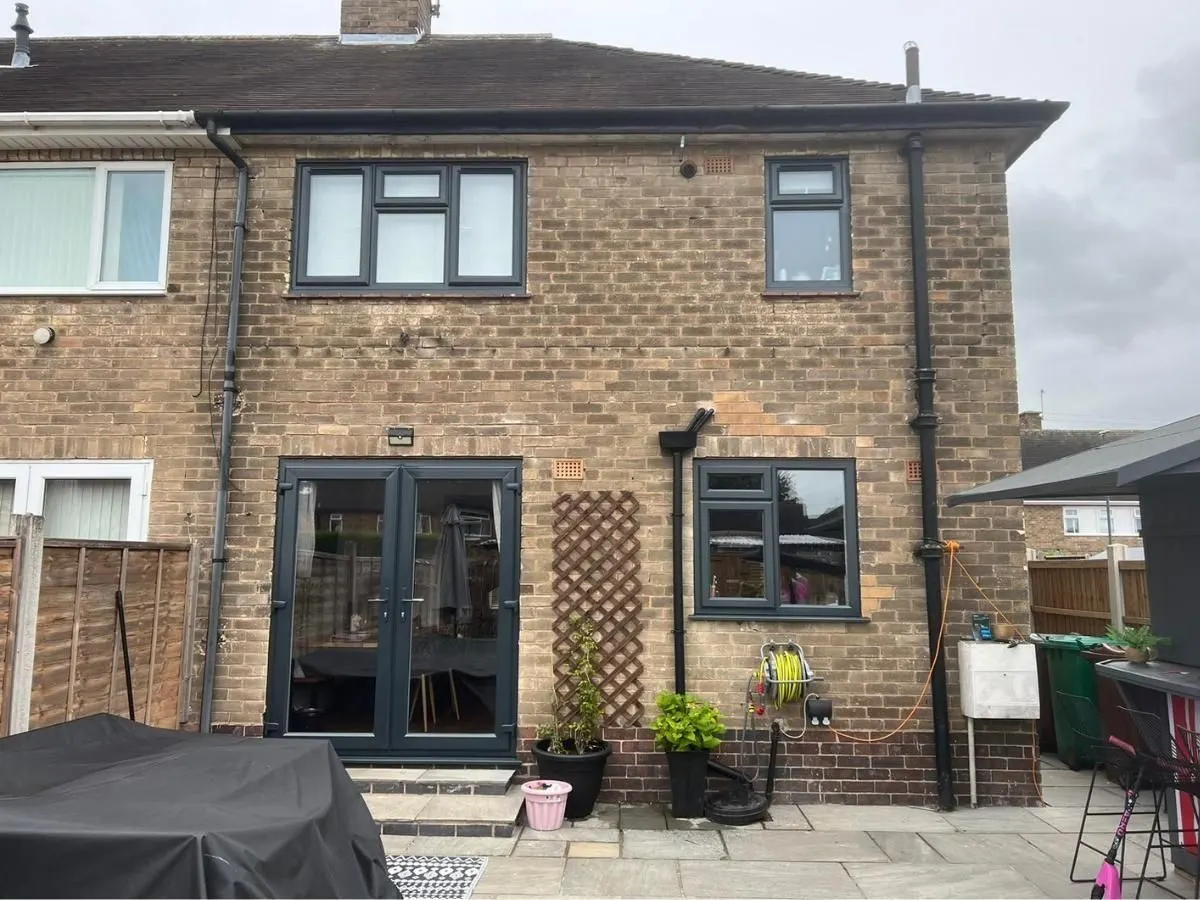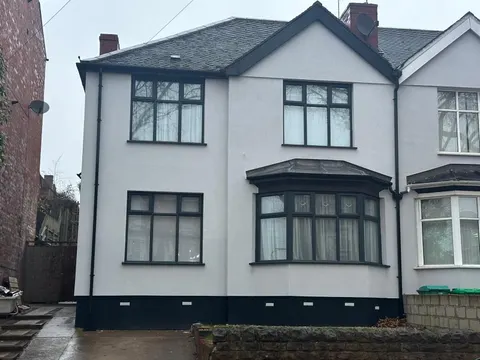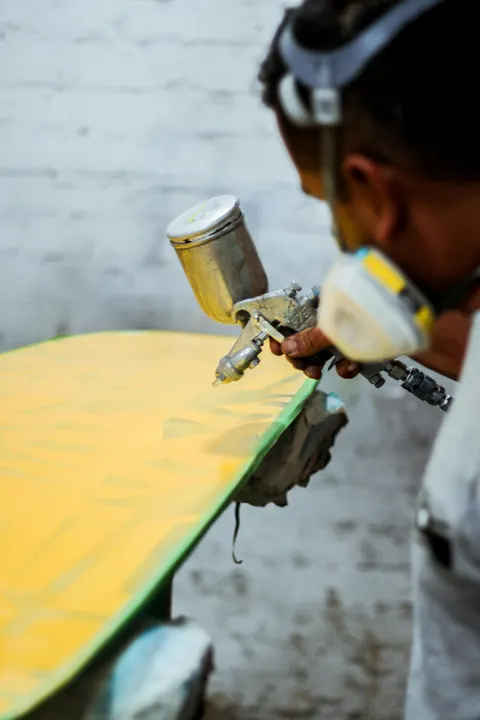

Yes, uPVC can be sprayed in winter, but not on every winter day. The coatings used for uPVC spraying need the surface to be dry and above a minimum temperature while they are applied and while they cure. In the East Midlands that rules out frosty mornings, wet days and fog, but leaves plenty of workable days between November and March. Here is what actually matters, and how it affects when you book.
Why temperature matters
A sprayed finish is only as good as its bond to the surface. Every coating manufacturer sets a minimum application temperature, and below it the coating dries too slowly, cures poorly and is more likely to fail early. The surface temperature counts as much as the air temperature: a frame in shade on a cold morning can be several degrees colder than the air around it.
The other factor is the dew point. If a surface is close to the temperature at which moisture condenses out of the air, a film of dampness forms on it that you often cannot see. Paint applied over that film will not bond properly. Professional practice is to keep the surface comfortably above the dew point, which is why early winter mornings are often unusable even when the day itself is mild.
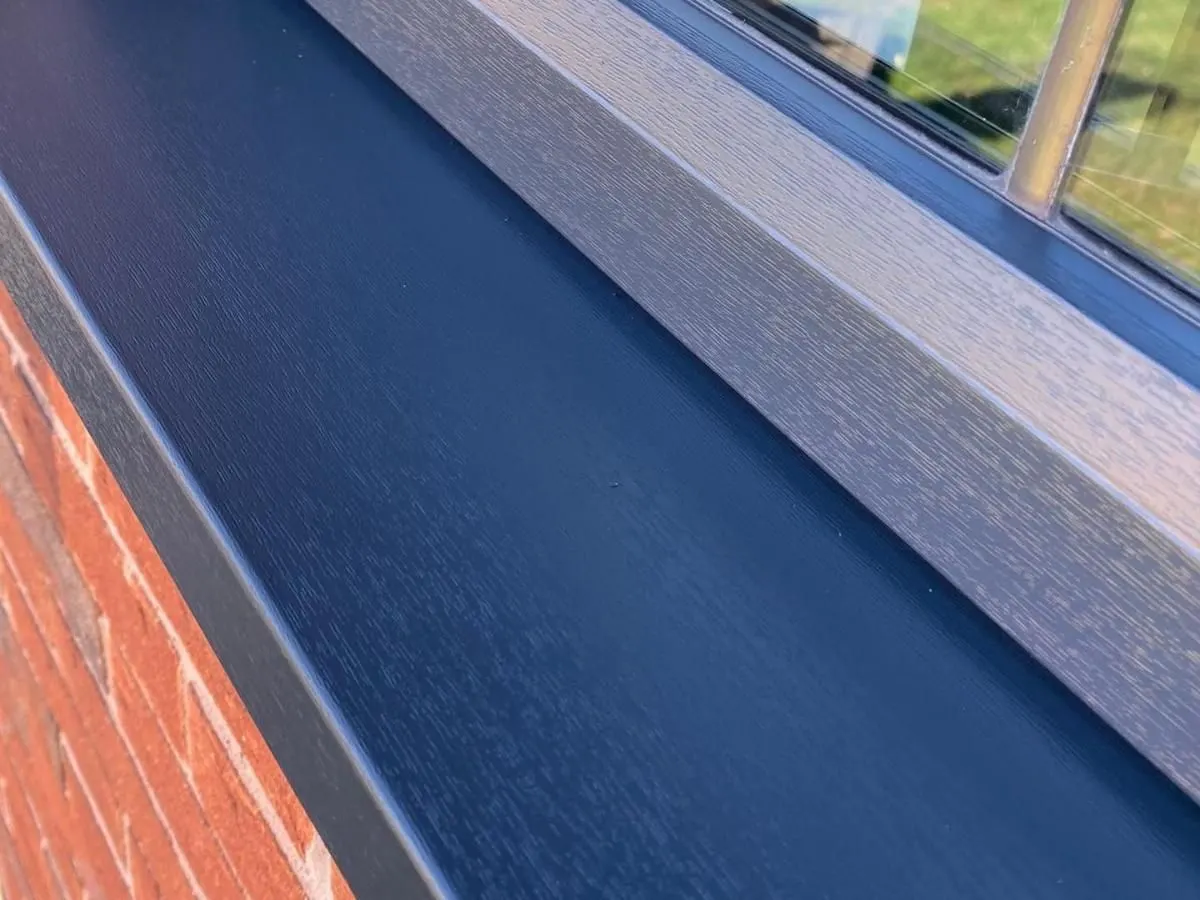
What stops a winter spray
- Frost and ice on frames, sills or masking.
- Rain or drizzle, during spraying or before the coating has had time to dry.
- Fog, mist and very high humidity, which leave moisture on the surface.
- Strong wind, which carries spray mist and blows debris onto wet coatings.
- Short daylight, which limits how much can be prepared, sprayed and left to dry in one day.
None of these is unique to winter, but they come together more often in the colder months. A good sprayer checks the forecast and the surface conditions on the day, and moves the job rather than spraying into the wrong conditions. A rearranged date is a minor inconvenience; a finish that fails is not.
How a winter job is planned
Winter spraying usually means starting a little later, once frost has cleared and surfaces have warmed, and finishing earlier to give the coating time to dry before temperatures fall again in the evening. Larger houses may be split over more days than they would in summer. Preparation, masking and the coating system stay exactly the same, as does the price you are quoted and the 10-year guarantee.
Jobs that suit winter best
Indoor work is unaffected by the weather, which makes winter an ideal time for:
- Kitchen cabinet spray painting, a fresh-looking kitchen in days rather than weeks, without the cost of new units.
- Fitted wardrobe spraying, which changes the feel of a bedroom without ripping anything out.
- Internal doors and conservatory interiors, where the work happens inside the house.
Booking outdoor work over the winter also has an advantage: spring is the busiest time of year for uPVC spraying, so getting a quote and a date in early means your windows, front door or garage door can be done on the first suitable days rather than at the back of the spring queue.
What about commercial work?
The same rules apply to shop fronts, cladding and metalwork. Commercial jobs are often scheduled around trading hours anyway, so winter projects are planned for the right weather windows. See our commercial spray painting services for more on how we schedule larger jobs.
Common questions
What is the coldest temperature uPVC can be sprayed in?
It depends on the coating, and the manufacturer's minimum applies to the surface as well as the air. The surface also needs to be dry and safely above the dew point. Rather than a single number, we check the conditions on the day.
What happens if it rains after spraying?
Rain on a coating that has not dried can mark or spoil the finish, which is why jobs are not sprayed when rain is forecast before the coating has had time to dry.
Is spraying more expensive in winter?
No. The price is the same all year round. Winter jobs may take more days to complete, but that does not change what you pay.
Is a winter respray as durable as a summer one?
Yes, provided it is applied in suitable conditions. That is the whole point of waiting for the right day.
Thinking about a respray?
If you are wondering whether a respray is the right choice in the first place, read our honest guide: is uPVC spraying worth it? Otherwise, send us a few photos for a free quote or call 0115 6478811, and we will give you a price and the first suitable dates.